what is Sport Architecture
Sport venues and precincts planned around the people and systems that make them work: athletes, spectators, media, workforce, security and operators.
When to involve SCA
At competition or concept stage, when a venue's form, capacity and site strategy are being set. During design development, when federation, broadcast and operational requirements need translating into plan. And on existing venues being prepared for a competition they were not designed to hold.
OUR APPROACH
What we contribute
Venue concept and architectural design for stadiums, arenas, aquatic and multi-sport facilities, and sport precincts.
Bowl geometry, sightlines, capacity strategy and the transition from public city to concourse to seat.
Competition requirements: field of play, athlete and official areas, media and broadcast positions, and the compliance layer international federations set.
Event-time and overlay implications built into the permanent design instead of resolved afterwards.
Legacy: how the venue is used after the headline event, who operates it, and what it costs to run.
Typical outputs
Competition and concept design, venue architecture packages, capacity and sightline studies, compliance-mapped functional layouts, and coordination with specialist and delivery teams. [CONFIRM] Deliverable list to be confirmed against SCA's standard engagement terms.
Relevant experience
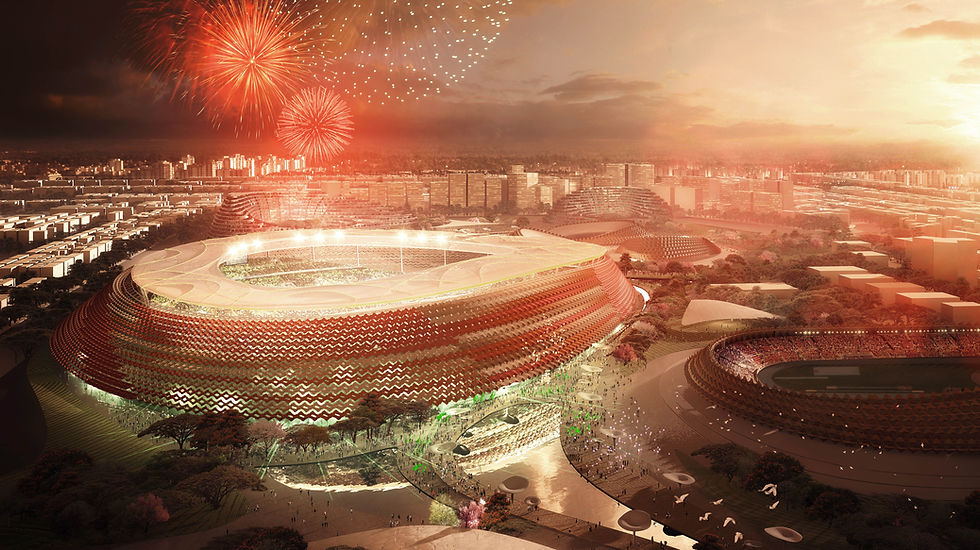
National Stadium and Sports Village, Addis Ababa. A 60,000-seat national stadium and sports precinct commissioned through international competition by Ethiopia's Federal Sports Commission, and won by a consortium assembled and led with LAVA and JDAW Architects. The stadium sits in an excavated amphitheatre that uses the existing topography to reduce structure and earthworks, with a facade reinterpreting the massob, the woven communal serving basket. [CONFIRM ROLE/CREDIT - the tracker records this as DESIGNSPORT/SCA in 2012. The correct entity and role at the time must be stated before publication.]
Al Thumama Stadium, Qatar 2022 FIFA World Cup. A 40,000-seat venue won through international competition as part of the consortium led by Ibrahim AlJaidah and the Arab Engineering Bureau, its form drawn from the gahfiya. [CONFIRM ROLE/CREDIT - confirm the precise SCA or Samantha Cotterell role within that consortium, and the correct entity at the time.]
How we help
If a venue is at competition, concept or compliance stage, SCA can work as lead designer or as the sport and event-time specialist alongside an appointed team.
QUESTIONS CLIENTS ASK US ABOUT OUR Sport Architecture SERVICE
Client-side experience of running events, not only of designing for them. SCA has worked inside organising bodies as well as on design teams, which is why the operational and event-time layer is planned at the same time as the architecture.
What does SCA bring that a general architecture practice does not?
How does SCA handle international federation and broadcast requirements?
As design constraints that shape the building, not a checklist applied at the end. Field-of-play dimensions, athlete and official routes, media and broadcast positions and accreditation zoning all have geometric consequences, and they are cheapest to satisfy while the bowl and concourse are still being set. [CONFIRM CLAIM] The specific federation standards SCA has worked to should be listed individually rather than claimed generally.
What types of sport projects does SCA work on?
Stadiums, arenas, aquatic and multi-sport venues, sport precincts and event-specific competition infrastructure, from international competition venues through to smaller specialist facilities.
Through the sequence rather than the finishes. Approach, arrival, screening, concourse and the moment of stepping out to the bowl are designed as one movement. Sightlines, circulation width and dwell space decide whether a full house feels controlled or chaotic.
How is spectator experience handled in venue design?
Yes, preferably from the start. What a venue is used for after the headline event, who runs it, what it costs to operate and what it means locally are design questions rather than post-event ones. They change capacity strategy, servicing and how much permanent structure a project should carry.
Does SCA work on sport venue legacy?

Industry Recognition

2025
WORLD Design Awards – Gold, NEXT Futures (Expo 2030 Riyadh)
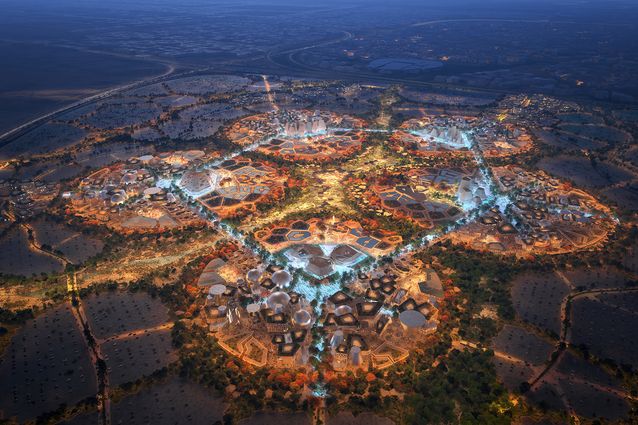
The Expo 2030 Riyadh Concept Master Plan, led by LAVA with an international consortium that includes Samantha Cotterell LLC as Expo Design Strategic Advisor, won Gold in the NEXT Futures: Vision category of the WORLD Design Awards 2025 (BETTER FUTURE Awards), recognizing projects that expand the potential of future cities.

2023
Venice Biennale - Kingdom of Saudi Arabia Pavilion - Contributing Architect
The Saudi Pavilion’s IRTH brochure profiles Samantha Cotterell’s research into salt, sand and other locally sourced materials as pathways to more sustainable architecture.

2021
AIA Gold Medal
In 2021, at an Austrade and International Chapter event held at the Australian Pavilion for Expo 2020 Dubai, Samantha Cotterell was awarded a Gold Medal by Justin McGowan, Australia's Commissioner-General for Expo 2020, recognizing her work promoting architecture as a key export in the Middle East and Africa region.
2020
Fellow of the Australian Institute of Architects
In 2020, Samantha Cotterell was named a Fellow of the Australian Institute of Architects, an honour given to members who have demonstrated a significant contribution to the architecture profession beyond practice.

2015
International Architectural Design Competition and Project Award
In 2015, Samantha Cotterell led DESIGNSPORT to win the International Architectural Design Competition and Project Award for the Qatar 2022 World Cup Stadium in Precinct 5, delivered for and with the Arab Engineering Bureau, Qatar.

2011
Australian Event Awards — Finalist
In 2011, Samantha's company DESIGNSPORT became a finalist in two categories at the Australian Event Awards, including 'Best Export' and 'Best Product/Service.'
RELAtED WORK

National Stadium and Sports Village, Ethiopia
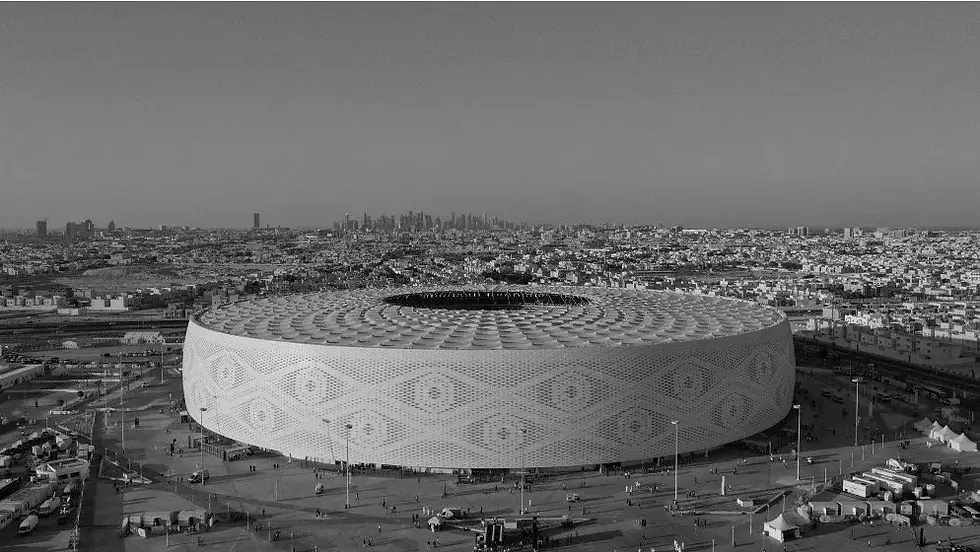
Qatar 2022 FIFA World Cup Stadium
As Seen In
RELAtED WORK